What Is Custom Jewelry and How Does the Design Process Work.
A ring in a display case can be beautiful and still feel almost right. The stone may be perfect, but the setting feels too plain. The style may fit, but the metal does not. That is where custom jewelry becomes useful.
Custom jewelry is jewelry made for a specific person, purpose, stone, style, or story. It may start with a sketch, an heirloom diamond, a photo for inspiration, or a simple sentence like, “I want something vintage, but not too delicate.” From there, a jeweler turns the idea into a wearable piece.
For many people, the biggest question is simple: what is custom jewelry, really? It is not always a completely wild one-of-a-kind design. Sometimes it means changing an existing design. Sometimes it means building from scratch. The goal is the same either way, to create jewelry that fits the person, the occasion, and the budget.
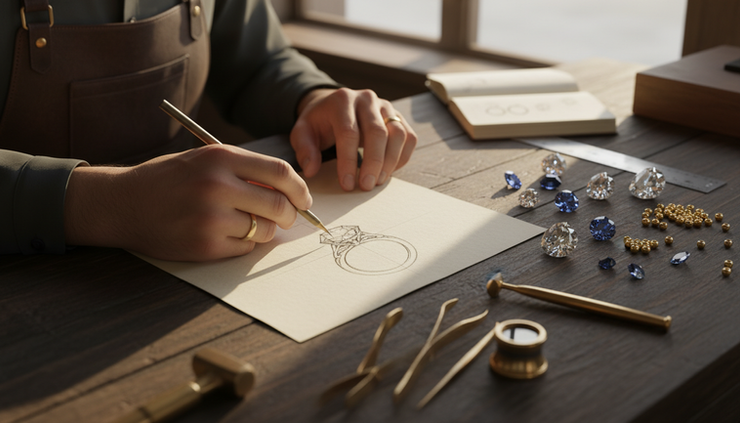
Custom jewelry means the piece is made around your idea
Custom jewelry is any piece designed or modified for a specific request. It can be a ring, necklace, bracelet, earrings, pendant, or charm. It can also be a redesign of jewelry someone already owns.
A custom piece might include:
A new engagement ring designed around a chosen diamond
A pendant made from inherited gemstones
A wedding band shaped to fit an existing engagement ring
Earrings matched to a necklace
A custom diamond ring inspired by a vintage design
A family birthstone piece with personal details
The word “custom” can cover a wide range. Some projects are fully original. Others begin with an existing setting and include changes to the stone shape, metal, width, finish, or design details.
That difference matters because it affects cost, timeline, and design freedom.
Customized jewelry
Fully custom jewelry
Starts with an existing design and changes certain details, such as metal, stone, size, or finish.
Starts from an idea and is designed from the ground up, often with sketches, CAD renderings, wax models, or hand fabrication.
Both can be meaningful. A customized piece may be the right choice when someone wants a proven design with a few personal touches. A fully custom piece makes sense when the vision is specific, the stone is unusual, or the piece needs to fit a unique setting or heirloom item.
For example, custom engagement rings often need more than a simple catalog setting. The center stone may have a special shape. The wearer may want a low-profile setting for comfort. The ring may need to pair cleanly with a future wedding band. Custom jewelry design allows those choices to be made on purpose rather than accepted as limitations.
The custom design process starts with a conversation
A good custom jeweler begins by learning what the piece needs to do. That sounds practical because it is. Jewelry is personal, but it also has to survive real life.
The first conversation usually covers a few key points:
The type of piece
The occasion or meaning behind it
The preferred metal color
The stone shape, color, or type
The wearer’s lifestyle
The budget range
The desired timeline
Any inspiration photos or existing jewelry
This stage does not require perfect answers. Many strong designs begin with loose direction. A person may know they want a yellow gold ring with an oval diamond, but not know the prong style, band width, or setting height. That is normal.
A custom jeweler helps translate taste into design decisions. “Simple and classic” could mean a solitaire. It could also mean a three-stone ring with clean lines. “Vintage” might mean milgrain detail, engraving, antique-style prongs, or a colored center stone.
For clients searching for a custom jeweler Keller TX, working with someone nearby can be helpful during this stage. Seeing stones, trying on ring profiles, and comparing metal colors in person can make the design easier to understand.

Stone selection shapes the look and the budget
The stone often becomes the anchor of the design, especially for rings. A diamond, sapphire, emerald, ruby, or other gemstone influences the setting style, durability, cost, and timeline.
For diamonds, the main considerations are often known as the 4Cs:
Cut
Color
Clarity
Carat weight
Cut has a major effect on sparkle. Carat weight affects size and price. Color and clarity can be adjusted based on taste and budget. A skilled jeweler can help compare stones so the final choice looks beautiful in real life, not just on paper.
For colored gemstones, durability matters. Some stones are better for everyday rings than others. Sapphires and rubies, for example, are often chosen for rings because they are hard enough for regular wear. Softer stones may be better suited for pendants or earrings, depending on the design.
Stone shape also drives the setting. A round diamond works in many styles. An oval may need careful attention to prong placement and symmetry. A pear shape or marquise may need protected tips. An emerald cut often calls for clean lines because the stone has a quieter, glassier look.
If the project uses heirloom stones, the jeweler may inspect them first. Older stones can have chips, worn facets, or unusual cuts. That does not mean they cannot be used. It means the design should protect them properly.
This is one reason Custom Jewelry created by Garner Wallace can feel different from buying a finished piece. The stone, setting, and wearer are considered together from the start.
CAD design helps turn the idea into something you can see
Once the direction is clear, the jeweler creates a design. Many custom jewelry projects use CAD, which stands for computer-aided design. CAD allows the jeweler to build a digital model of the piece with measurements, proportions, stone placement, and details.
CAD is helpful because it shows the design before the piece is made. It can reveal things that are hard to understand from a sketch alone, such as:
How high a ring sits on the finger
How thick the band looks from the top and side
How the center stone sits in the setting
How side stones or accent stones are spaced
How a wedding band may fit next to an engagement ring
Some jewelers also provide renderings or wax models. A wax model gives a physical sense of size and shape. It will not look like the finished metal piece, but it can help with scale.
This approval stage is important. It is much easier to adjust the design before casting, setting, or finishing begins. A small change in band width, prong style, or stone placement may change the entire feel of a piece.

Approval, casting, setting, and finishing complete the piece
After the design is approved, the piece moves into production. The exact method depends on the design and the jeweler’s process, but the main stages are usually similar.
First, the piece is cast or fabricated in the chosen metal. Common choices include yellow gold, white gold, rose gold, platinum, and sometimes sterling silver for certain pieces. Each metal has its own look, feel, cost, and maintenance needs.
Next, the jeweler prepares the setting and places the stones. Stone setting requires precision. Prongs, bezels, channels, or other setting styles must hold stones securely without overwhelming the design.
After setting, the piece is finished. This can include polishing, brushing, engraving, rhodium plating for white gold, or adding texture. The jeweler then inspects the piece for fit, finish, stone security, and design accuracy.
A finished custom piece should feel intentional. The stone should make sense in the setting. The ring should fit comfortably. The details should support the design rather than compete with it.
Cost and timeline depend on the design, materials, and complexity
There is no single price for custom jewelry because the range is wide. A simple custom pendant using a small existing stone will not cost the same as a platinum engagement ring with a large diamond and intricate side details.
The main cost factors include:
Metal type and weight
Stone type, size, and quality
Design complexity
Number of stones
Labor and craftsmanship
CAD, modeling, casting, or hand fabrication
Engraving or specialty finishes
Use of heirloom stones or repairs before resetting
Complexity affects both labor and time. A clean solitaire may be more direct. A ring with a hidden halo, filigree, hand engraving, and a perfectly fitted band takes more design and bench work.
Timeline also varies. A straightforward custom project may take several weeks. More detailed work can take longer, especially if the project requires stone sourcing, multiple design revisions, specialty engraving, or matching an unusual existing piece.
The best way to avoid stress is to start early. This matters most for proposals, anniversaries, birthdays, and weddings. If a deadline is fixed, share it at the beginning so the jeweler can explain what is realistic.
The most successful custom designs balance three things: the look you want, the way the piece will be worn, and the budget you want to stay within.
Custom jewelry is a good fit when the details matter
Custom does not always mean more complicated. It means more specific. That can be valuable when the piece carries meaning or when the wearer has clear preferences.
Custom jewelry may be the right choice when:
A store-bought design feels close, but not right
The wearer wants a specific stone shape or metal
The design needs to match another piece
An heirloom stone needs a new setting
The ring must fit an active lifestyle
The piece marks a major life event
The design needs personal symbols or engraving
It may not be necessary when a finished piece already checks every box. There is nothing wrong with choosing from a case when the style, fit, stone, and price are right. The value of custom jewelry is having control where control matters.

FAQ
Is custom jewelry more expensive than ready-made jewelry?
It can be, but not always. Cost depends on the metal, stones, design work, and labor. A simple custom piece may be comparable to a ready-made piece, while a detailed design with rare stones will cost more.
How long does custom jewelry take to make?
Many custom pieces take several weeks from consultation to completion. Complex designs, stone sourcing, revisions, engraving, or heirloom resetting can add time. Starting early is the safest choice for proposal or wedding dates.
Can I use my own diamond or gemstone?
Yes, in many cases. A jeweler will usually inspect the stone first to check its condition, measurements, and suitability for the new design. Some older stones need extra protection in the setting.
Do I need a sketch before meeting with a jeweler?
No. Inspiration photos, notes, or even a rough idea are enough to begin. The jeweler can help turn preferences into a design through sketches, CAD renderings, stone options, and material choices.
What is the difference between custom engagement rings and custom diamond rings?
A custom engagement ring is made for a proposal or marriage commitment. A custom diamond ring can be any ring designed around a diamond, including anniversary rings, right-hand rings, heirloom redesigns, or fashion pieces.
The best custom pieces start with clear priorities
Custom jewelry works best when the process is thoughtful from the beginning. The idea comes first, then the stone, design, approval, production, and finishing. Each step helps turn a personal concept into a piece that can be worn for years.
The most helpful starting point is not a perfect design. It is a clear sense of what matters most: the stone, the style, the meaning, the budget, or the deadline. With those priorities in place, a custom jeweler can guide the rest of the process and create a piece that feels personal for the right reasons.


Comments